
Cabinet Painting vs Replacement: A GTA Kitchen Guide
Decide whether to paint or replace your kitchen cabinets with clear costs, timelines, and local considerations for Toronto homeowners.
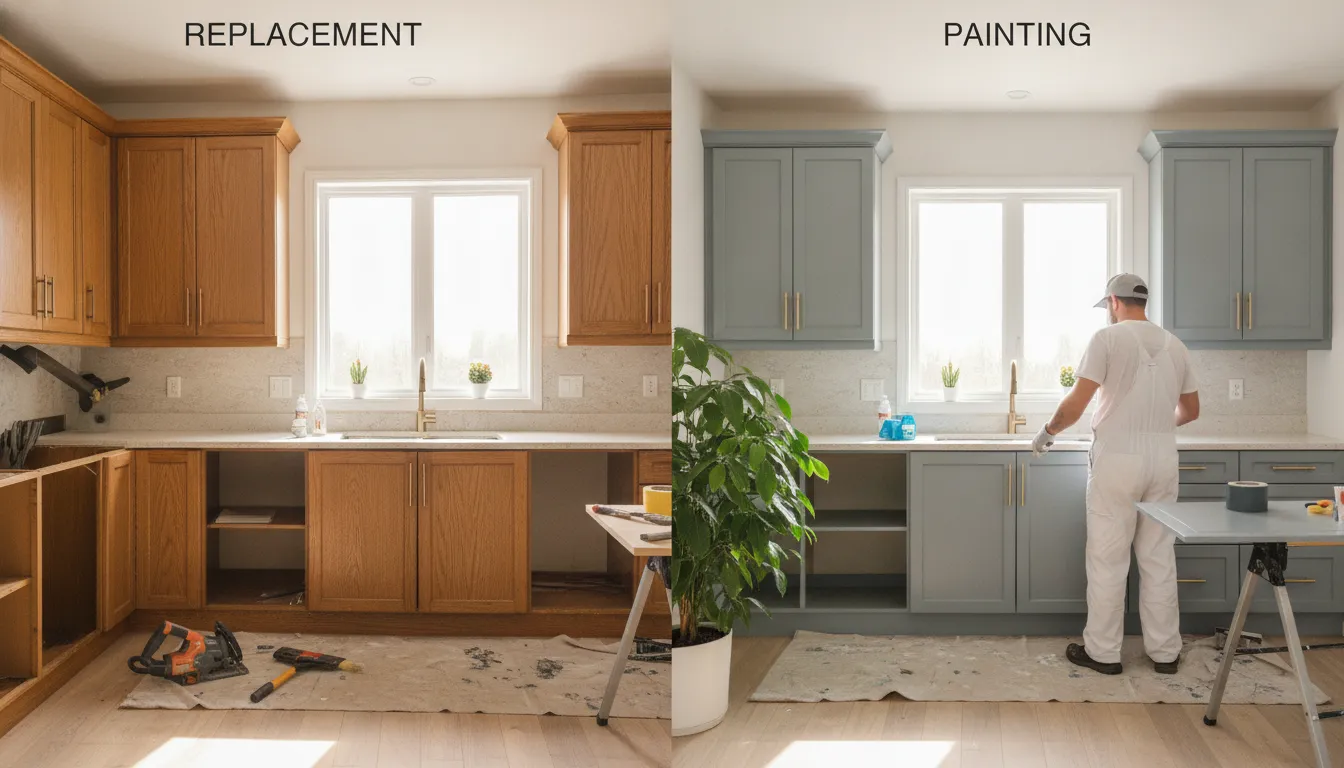
Should you paint or replace your kitchen cabinets in the GTA?
If cabinets are structurally sound, painting or refacing is usually faster and less expensive than full replacement; if doors, frames, or boxes are warped, water-damaged, or out of square, replacement is often the better long-term choice.
What painting (and refacing) fixes
Painting and refacing address surface-level problems: outdated colour, minor nicks, worn finishes, and cosmetic wear. You can change style with new doors or hardware, or paint the existing doors and frames for a fresh look without replacing the cabinet boxes.
When replacement is necessary
Replacement becomes necessary when cabinet boxes are delaminated, moldy from water intrusion, or the carcasses are out of square so drawers and doors won’t align. Structural problems often show as sagging shelves, persistent door gaps, or hardware that no longer holds screws.
Cost and timeline basics
Painting a typical Toronto kitchen (full cabinets) is commonly a fraction of the cost of replacement and can be done in days to a couple of weeks depending on prep and curing. Full replacement can take several weeks and involves demolition, new cabinetry lead times, and trades coordination—expect more disruption.
Longevity and resale value
A professional paint job or refacing can look great for 5–15 years if prep and materials are high quality; replacement offers a longer lifespan and opportunity to reconfigure layout, which can matter for resale or a growing family. Think of painting as a mid-life refresh and replacement as a long-term investment.
Step-by-Step: Cabinet Painting vs Replacement: A GTA Kitchen Guide
A practical workflow to decide and execute either option in Toronto-area homes, including documentation and trades coordination.
- 1
1. Inspect and document
Assess cabinet boxes, doors, drawer function, and signs of water or pest damage. Photograph every problem area and note measurements—this documentation helps with quotes and, if applicable, insurance conversations.
- 2
2. Define your goals and budget
Decide if the aim is cosmetic (colour/style update), functional (new hardware, soft-close drawers), or layout change (remove wall, add island). Set a budget range that includes contingency for surprises found during demo.
- 3
3. Get multiple detailed bids
Request itemized estimates from a painter experienced with cabinetry and from at least one cabinet maker/installer in the GTA. Compare scope: prep work, priming system, finish coats, hardware, timeline, and warranty.
- 4
4. Confirm permits and insurance needs
For most cosmetic jobs you won’t need a building permit, but electrical or structural layout changes may. If working through an insurance claim (water/fire), contact your insurer early and check Toronto-area claim intake conventions; always verify policy and municipal rules locally.
- 5
5. Prepare the space and schedule trades
Plan where to store dishes, protect floors and counters, and schedule painters, electricians, and installers in the right order. For replacement, demo comes first; for painting, doors are often removed and sprayed in a contained area.
- 6
6. Final inspection and follow-up
Inspect finishes, door alignment, and hardware function before signing off. Keep warranty documents and a photo record of the finished work for future maintenance or resale.
Mistakes to Avoid
Homeowners often make avoidable errors that increase cost, prolong disruption, or lead to an unsatisfactory finish. The following mistakes are common and easy to prevent with upfront planning and the right questions.
Skipping proper surface prep
Poor adhesion is usually the painter’s fault of not preparing surfaces, but homeowners can prevent it by insisting on sanding, deglossing, and appropriate primers for laminate or previously painted surfaces. Ask your contractor what primer system and deglosser they’ll use for your cabinet material.
Choosing low-quality paints and not specifying cabinet-grade finishes
Not all paint is equal—cabinet doors need durable, scratch-resistant finishes (acrylic enamel or conversion varnish/alkyd alternatives). Confirm whether the quote includes a cabinet-grade topcoat and whether doors will be sprayed or rolled; sprayed finishes typically look smoother and last longer.
Underestimating hidden water damage
Painting over cabinets with past water or mold damage is a temporary fix. During estimate, remove a toe-kick or open a box to check the underside and back of carcasses, and include remediation costs in the budget if rot or mold is present.
Not checking references and local experience
A contractor unfamiliar with GTA humidity cycles or Toronto installation conventions can under-prepare for climate-related expansion/contraction. Check references specifically from Toronto or nearby cities like Mississauga and Markham, and ask how they handle seasonal movement and on-site storage.
What Affects Your Outcome
Several practical factors change whether painting or replacing is the better choice and how the project goes.
Cabinet material and construction
Solid wood, plywood, MDF, and particleboard behave differently—MDF paints smoothly but can swell with water; particleboard delaminates when wet and often requires replacement.
Extent of hidden damage
Hidden mold, water-damaged cabinet boxes, or sagging frames push the decision toward replacement because painting won’t resolve structural problems.
Desired aesthetic and function
If you only want a colour update, painting or refacing is cost-effective; if you need layout changes, built-in appliances, or higher-end finishes, full replacement gives design flexibility.
Local climate and seasonality
Toronto’s seasonal humidity and temperature shifts affect finish curing and wood movement—scheduling finish work in stable indoor conditions reduces issues like cracking and adhesion problems.
Contractor skill and method
Whether doors are sprayed in a controlled booth, roll-coated on-site, or rebound-sprayed affects the look and durability. An experienced GTA contractor will account for site dust control and proper masking.
Insurance and permit considerations
If the work stems from an insured loss, prompt documentation and following your insurer’s claim process affects timelines and coverage; if structural or electrical changes are planned, check Toronto building department guidelines—always verify locally.
Frequently Asked Questions
How much does painting cabinets cost in Toronto?
Costs vary widely based on kitchen size, number of doors/drawers, and finish system. Expect painting to be a fraction of full replacement; get at least three itemized quotes that list prep, primer, topcoats, and labor so you can compare accurately.
Will painted cabinets look cheap compared to new ones?
A professional paint job—especially sprayed with a cabinet-grade topcoat—can look as high-end as many new cabinets, provided doors are in good condition and prep is thorough. Visible issues like pitted surfaces, bad repairs, or poor hardware will show regardless of finish, so address those first.
Can I refinish laminate cabinets instead of replacing them?
Laminate can be refinished if the surface is intact; it requires deglossing, bonding primer, and typically a sprayed finish for best adhesion. If laminate is peeling or bubbling, replacement of doors or full cabinets may be more reliable.
How long will painted cabinets last in a Toronto home?
With proper prep, quality materials, and normal use, a professional finish can last several years—many homeowners see 5–15 years before a refresh. Longevity depends on traffic, cleaning habits, and whether the finish was sprayed or rolled.
Do I need a permit to replace kitchen cabinets in Toronto?
Most cosmetic cabinet replacements don’t require a building permit, but structural changes, moving plumbing, or altering gas/electrical systems often do. Confirm with the City of Toronto building department and, if applicable, discuss permit responsibilities with your contractor.
Should I file an insurance claim for a kitchen cabinet issue?
File a claim when damage results from a covered peril in your policy (e.g., sudden water escape from plumbing). Document damage thoroughly, notify your insurer promptly, and verify how the insurer prefers estimates and contractor selection—policies and claims procedures vary, so confirm details with your provider.
Free cabinet condition assessment for Toronto homeowners
Schedule a no-cost inspection to evaluate whether painting, refacing, or replacement is the best approach for your kitchen.
Get a Free Quote