

Exterior Painting Done Right
Exterior Painting and trim work across Toronto — reliable, practical, email us for a quote
Email Us for a Free EstimateExterior Painting in Toronto
Exterior Painting in Toronto is more than colour. It’s weather protection for wood, metal, brick and stucco. Toronto’s mix of older Victorians and newer townhomes means different substrates and different prep work. Toronto Painters Group lays out the scope and options before a coat goes on.
What this service covers
We paint siding (wood, engineered wood, vinyl where trim is repainted), brick (masonry paints and breathable primers), stucco and parged surfaces, trim, fascias, soffits, doors and entrywork. We also handle spot repairs: caulking, rotten wood replacement, sanding and priming, and back-priming of bare timber. Drywall or interior finishes are outside this scope unless listed in your written quote.
Signs you need it now vs what can wait
Peeling, blistering, or cracking paint and exposed substrate need prompt attention — moisture and freeze-thaw will widen damage. Cosmetic fading or mild chalking can wait a season if budgeting dictates, but waiting makes future prep more labour-intensive. If you’re selling, fresh exterior paint can be a cost-effective curb-appeal fix; if your siding has deep rot, replacement beats a paint-only patch.
Why acting early saves money
Catching problems early limits repair depth: sanding and spot-prime cost far less than replacing rotted trim or re-pointing brick. Early surface maintenance extends paint life and prevents moisture tracking into sheathing and studs. In Toronto, where freeze-thaw cycles can open joints, regular painting reduces long-term framing repairs.
Why Toronto conditions matter
Toronto’s climate — humid summers, freezing winters and strong sun — stresses coatings in different ways than drier regions. UV causes fade on south-facing walls; moisture and ice drive blistering on north and shaded elevations. We choose breathable primers for masonry and flexible acrylics for siding to match local building assemblies and to let moisture escape instead of being trapped.
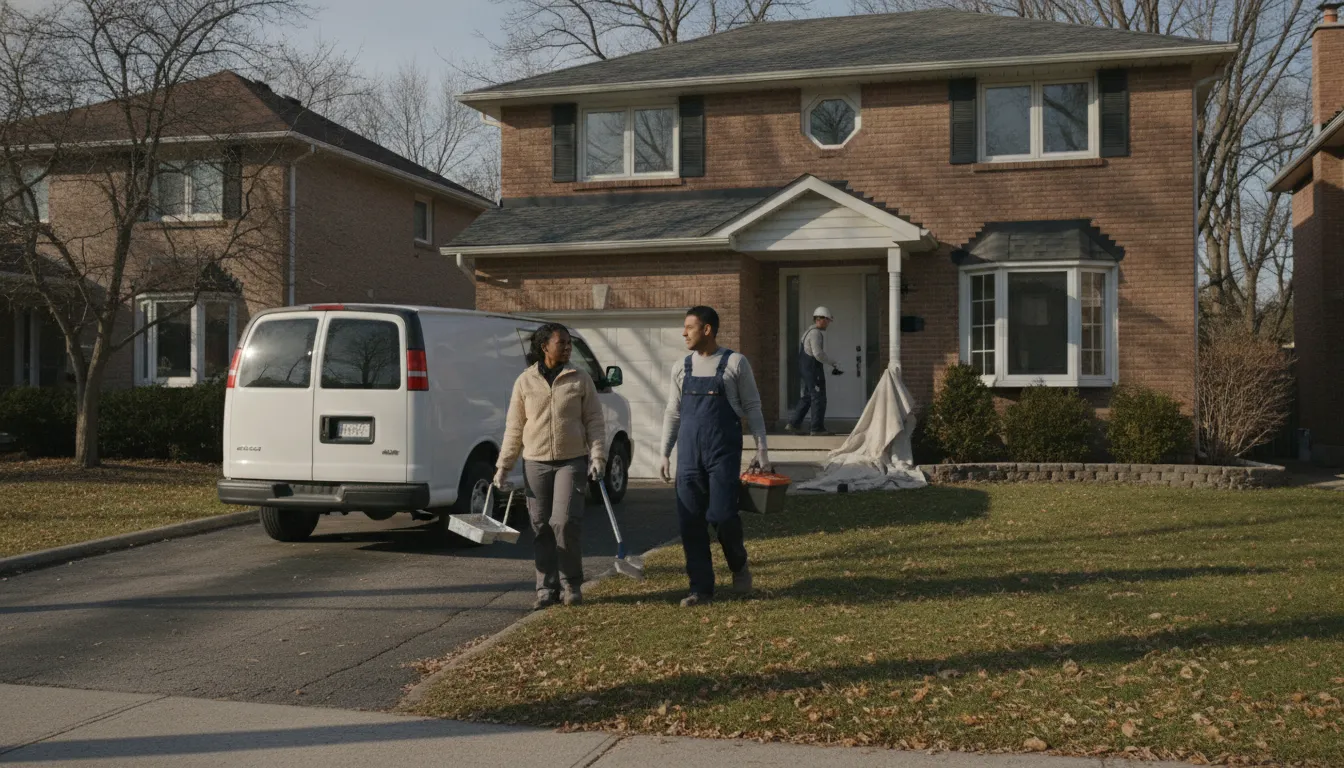
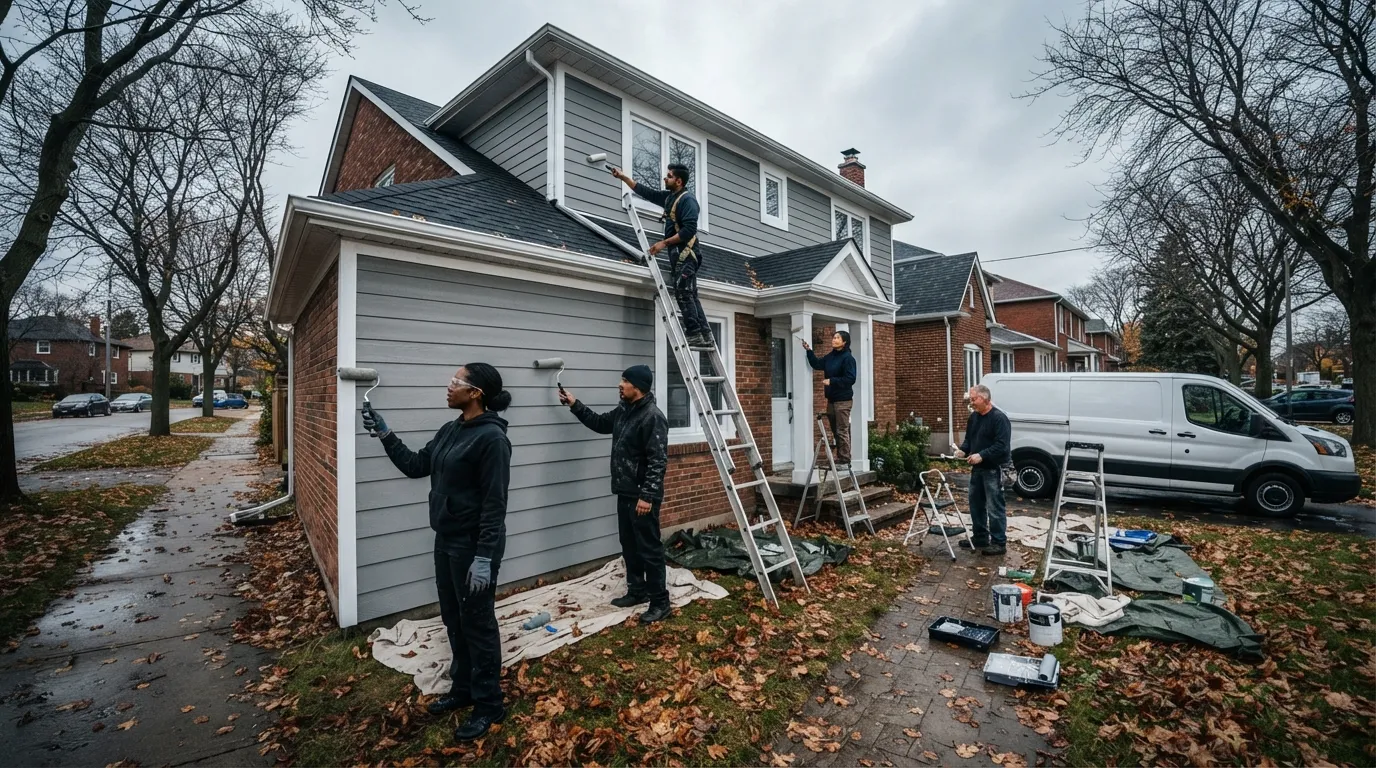
Request a no-obligation exterior assessment by email — we’ll outline repairs and paint options
Email Us for a Free Estimate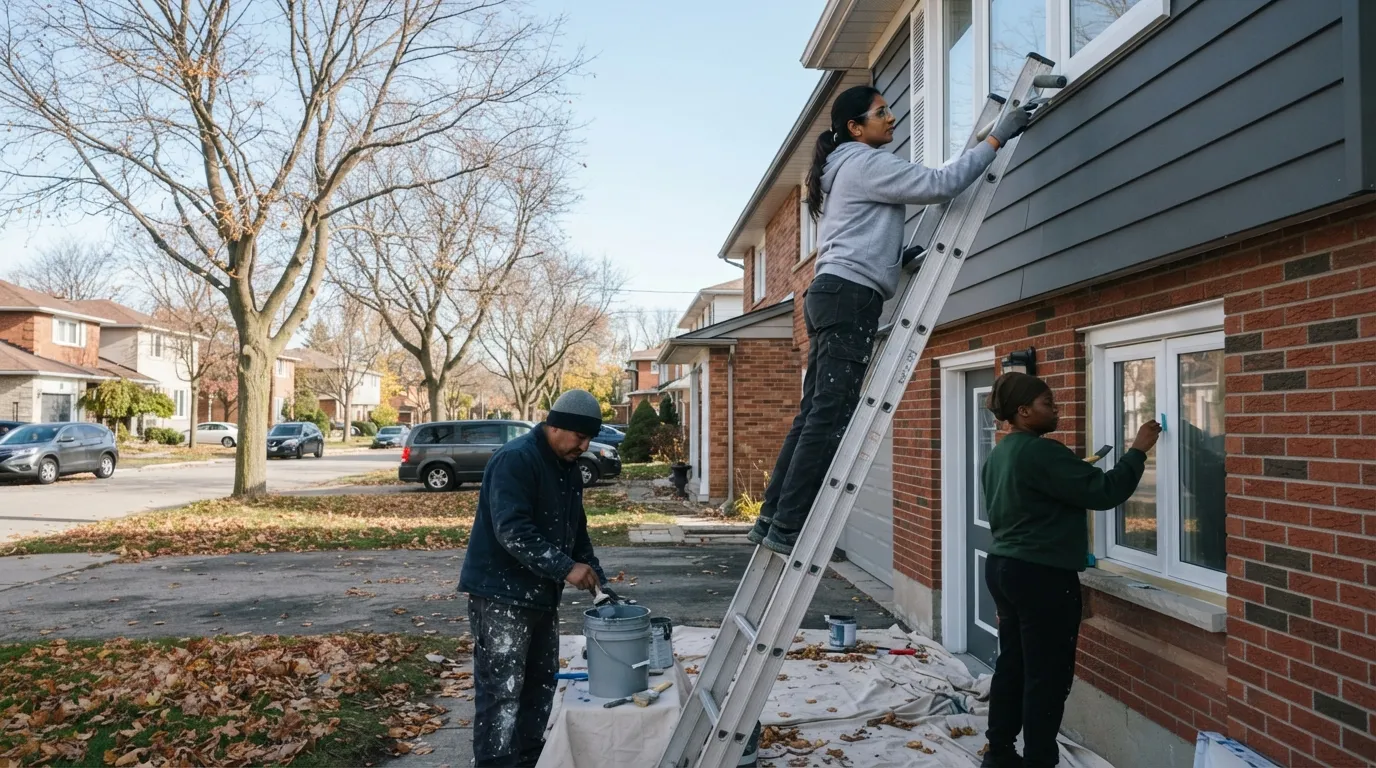
Exterior Painting in Toronto
Exterior Painting in Toronto is more than a fresh coat. It’s weatherproofing, curb appeal, and a maintenance strategy for siding, brick, stucco and trim that face harsh seasons. Toronto’s mix of Victorian semis, mid-century brick homes and new builds calls for material-specific methods. Toronto Painters Group treats each wall assembly by its components and by the realities of this city’s climate and building stock.
What this service covers
We paint vinyl and wood siding, fiber cement and composite cladding, painted brick and masonry, stucco, wood and PVC trim, soffits and fascia, and exterior doors. We include surface preparation like scraping, pressure washing, mildew treatment, caulking of joints and priming of bare wood or patch repairs. Flashings, metal trim and eavestrough interfaces are checked and masked to protect seals. The scope also covers final touch-up and weatherproofing details so paint protects the substrate, not just looks good.
When you need a full repaint versus a spot fix
Choose a full Exterior Painting job when paint is peeling, large areas are blistering, or multiple substrate types show failure—these are signs of adhesion loss, long-term UV breakdown or moisture intrusion. A spot repair makes sense for small scuffs, isolated peeling around entries, or when matching a freshly replaced board. We’ll advise when sanding and feathering with targeted recoat is reasonable versus when stripping back to bare material and re-priming is the durable option.
Why acting early saves money
Early intervention stops rot, nail-pop and substrate decay that lead to costly carpentry. Repainting before moisture works into the substrate prevents larger repairs to sheathing, trim and window sills. Timely paint work preserves resale value and curb appeal—useful when preparing a Toronto property for market. In many cases a preventative repaint extends the life of cladding by years, reducing lifecycle costs.
Why local conditions matter
Toronto’s seasonal extremes—hot, UV-intense summers and wet, freeze–thaw winters—stress paint films differently than a milder climate. Urban pollution, road salt in the inner suburbs and overhead tree sap in older neighbourhoods require specific primers and topcoats. We match coatings to the substrate and to Toronto microclimates: lakeshore homes, midtown brick terraces and east-end clapboard each need different attention to prep and materials.
Why Choose Toronto Painters Group for Exterior Painting
Straight talk. Clear scope. Local crews who work on Toronto roofs, porches and trim every season. We write everything down and leave the site cleaner than we found it.
Transparent Written Quotes
Every job gets a written scope with materials, surface prep and approximate timing. You see primer, caulking, fastener replacement and topcoat details so there are no surprises.
No Hidden Fees
We price for the work listed. If we discover rotten sheathing or hidden damage we document it and propose a separate fix—not a surprise invoice. You approve any extra repairs in writing.
Commitment to Cleanup
We protect landscaping, windows and patios with tarps and drop cloths and collect paint chips and debris. A tidy site is part of the job, so you don’t inherit our mess when we leave.
Local Toronto Crew
Our teams know Toronto neighbourhoods—from the Junction to the Beaches—and work with common local assemblies and access challenges. That experience keeps projects efficient and predictable.
Workmanship Guarantee
We back our work with a workmanship guarantee that covers adhesion and visible failures under normal conditions. The guarantee is documented in your scope and applies once final payment and the sign-off walkthrough are complete.
Clear Communication
We manage expectations with a single email-first point of contact and a written timeline. Progress photos and a final checklist are included in your job file for future reference.
Signs You Need Exterior Painting in Toronto
Keep an eye on the paint finish and the substrate under it. These are common, practical signs that the paint is no longer protecting the assembly and needs attention from a pro.
Peeling or Flaking Paint
Large areas where the topcoat pulls away mean adhesion failed—often from moisture or poor previous prep. Left alone, exposed wood or sheathing will absorb water and rot.
Blistering or Bubbling
Bubbles in the paint film form when moisture or heat is trapped under the coating, or when paint is applied over a damp surface. These gaps let water migrate and accelerate substrate decay.
Fading and Chalky Finish
UV exposure breaks down pigments and binder, leaving a chalky, powdery surface that no longer sheds water. Chalked paint signals you need a clean, primed surface and a UV-resistant topcoat.
Mildew and Staining
Black or green staining commonly appears in shaded, damp areas and on porous substrates like stucco and old decking. This biological growth eats at the finish and indicates poor drainage or ventilation.
Cracked or Missing Caulking
Gaps at joints, windows and trim allow water into cavities and behind cladding. Re-caulking and repainting seals these entry points and restores the weathertight barrier.
Rust Stains on Metal Trim
Rust indicates corroding metal flashings or fasteners—left untreated, corrosion worsens and stains adjacent paint. Metal needs cleaning, primer and a suitable metal topcoat to prevent return.
Soft or Decaying Wood
Soft spots in trim or siding under failing paint mean moisture has compromised the wood fibres. These areas need replacement or stabilizing filler before repainting; painting over rot only masks the problem.
How much does Exterior Painting cost in Toronto?
Is my budget aligned with the work I need?
Be honest about whether you need cosmetic refresh or structural restoration. A tight budget suits limited spot repairs and touch-up work; major substrate repair and high-performance coatings require a larger investment but deliver longevity.
When in the season should I book?
Toronto’s painting season is limited by temperature and humidity—late spring through early fall is ideal. Schedule early: prime and topcoat require temperatures above manufacturers’ minimums for proper cure; poor timing risks adhesion problems.
Repair versus replace carpentry
If trim is soft or boards are delaminated, replacing is usually better than filling and painting over the damage. Small isolated rot can be repaired, but widespread decay needs replacement to stop recurrence.
Which materials and finishes should I choose?
Consider substrate compatibility: masonry needs breathable systems, wood needs primers that seal tannins, and vinyl responds better to flexible topcoats. Higher-quality coatings cost more up front but resist chalking, UV fade and frequent touch-ups.
How disruptive will the work be at my property?
Expect scaffolding or ladders on multi-storey homes and some noise during prep. We plan for access, protect plants and patios and stage equipment to limit disruption—short jobs may be less intrusive and cheaper.
Are permits or heritage rules involved?
Painting alone rarely needs a permit, but heritage districts in Toronto can require approval for colour or finish changes. Check with your local planning office if you live in a designated conservation area; we’ll supply documentation to help your application.
How much does Exterior Painting cost in Toronto?
Cost depends on square footage and the types of surfaces: painted brick and stucco often need special primers and more prep, while vinyl and composite siding can be simpler. Access—whether ladders are enough or scaffolding and lifts are required—affects labour and equipment. Hidden damage found during prep (rot, failed flashings) can add to scope; our process is to inspect, document and email a written quote with optional repair line items you approve.
How long will my exterior painting project take?
Small houses or partial repaints can be completed in a few days; larger two-storey houses with full prep and carpentry can take one to two weeks depending on weather and repairs. Drying and cure times between primer and topcoat are dictated by the chosen coatings and Toronto’s temperature/humidity—those times are built into the schedule we provide by email.
What paints and primers do you use for different surfaces?
We select primers by substrate: masonry primer or breathable sealers for brick and stucco, alkyd or acrylic-alkyd primers for bare wood, and adhesion primers for slick vinyl or composite. Topcoats are chosen for UV stability and flexibility—acrylic latex for most cladding, elastomeric where movement is expected, and metal-specific coatings for flashings.
Do I need permits or inspections in Toronto for repainting?
Typically, repainting alone doesn’t need a permit. Exceptions include work that alters the thermal envelope, replaces cladding or affects structural components. If you’re in a heritage conservation area, local approvals for colour and finish can be required; we’ll provide notes and photos to support your application.
What kind of warranty or guarantee do you provide?
We provide a workmanship guarantee that covers visible adhesion failure and workmanship-related defects under normal exposure. Product warranties are manufacturer-specific; we document the coatings used and how to register or claim them. All warranty details are included in your written scope.
How should I prepare my property before painters arrive?
Clear patios, move patio furniture and fragile planters away from the work area and secure loose items. Trim low branches that block access and tell neighbours about scaffolding or parking needs; we manage site protection but local cooperation speeds the job.
Why do quotes differ between contractors?
Quotes vary by the level of surface prep, choice of primers and topcoats, whether paint is included at industry coverage rates or upgraded, and whether contractors include scaffolding or subcontract it. Some contractors underprice to win work and add change-orders later; our quotes list responsibilities line-by-line so you can compare true scope rather than headline costs.
Professional Exterior Painting Built for Toronto Conditions
Toronto’s climate and housing stock dictate how we prep, prime and topcoat. From lakeshore humidity to midtown tree canopy, every microclimate shifts the right choice of materials and methods. We handle residential and small commercial exteriors with equal attention to substrate, detailing and access.
Ontario climate stresses
Freeze–thaw cycles, road salt and extended humidity cycles degrade paint films and metal flashings. For Toronto, we favour breathable primers on masonry and flexible elastomeric options where stucco movement is expected. Topcoat selection balances UV resistance and flexibility to resist cracking in winter and softening in summer.
Local housing-stock considerations
Toronto has older brick terraces, wood-clad Victorian homes and modern clad townhouses; each substrate takes different prep. Brick often needs masonry primer and a breathable finish; wood requires scraping, epoxy patching and oil- or acrylic-alkyd primers on bare timbers. We tailor methods to the assembly so repairs don’t trap moisture.
Permits and code context
Most exterior paint projects don’t need a permit, but changes that affect cladding, insulation or structural trim may. In Toronto, historic district rules can affect colour and finishes—check with the local heritage office if your home sits in a conservation area. When work intersects with building envelope repairs we document scope so your trades or building inspector can review.
Workmanship and standards
We follow professional painting standards: surface prep, appropriate primer by substrate, two-coat factory-coverage topcoat minimum, correct drying times and documented masking. That discipline prevents failures and gives you a verifiable record should you sell the property in Toronto’s competitive market.
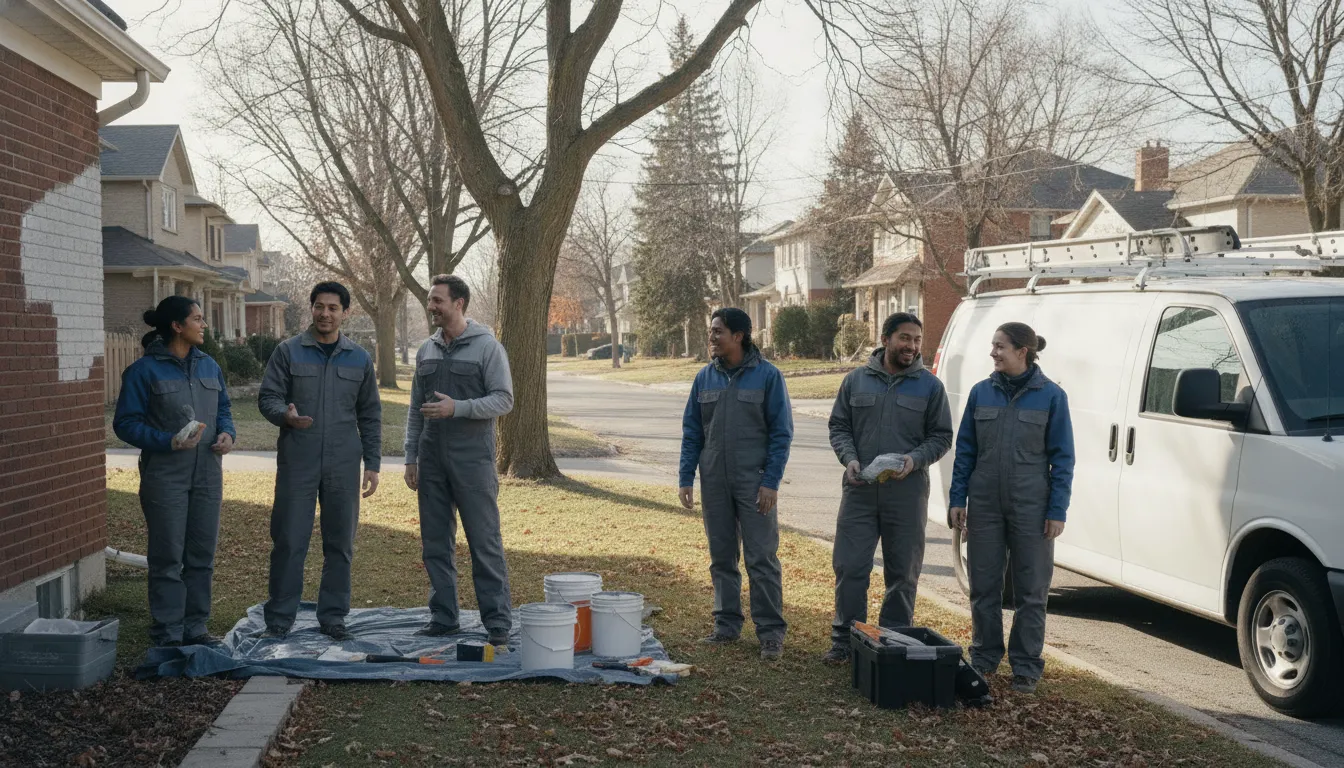
Our Exterior Painting Process in Toronto
We keep the process simple and documented so you know what to expect by email at each stage. Here’s how a typical Toronto job progresses.
- 1
On-site assessment
We inspect cladding, trim, flashings, caulking and adjacent roof and eavestrough interfaces. Photos and notes identify current failures, hidden moisture risk and access needs so the written scope is accurate.
- 2
Written scope and estimate
You get a line-item email with the scope: surface prep, primer choice, topcoat, fastener replacement and any carpentry. Change-orders for discovered damage are documented and emailed for approval before work proceeds.
- 3
Scheduling and prep
We schedule work to fit Toronto’s favourable weather window and confirm access and site protection plans by email. We arrange for scaffolding or staging if required and protect landscaping and exterior fixtures.
- 4
Execution and protection
Surface prep includes pressure washing, scraping, sanding, chemical cleaners for mildew, rust treatment, spot priming and full re-priming where needed. We mask windows, cover plants and use drop cloths; painting follows manufacturer’s application and cure specs.
- 5
Final walkthrough and documentation
We walk through the completed work with you by email and in person when convenient, point out warranty terms and leave a documented job file. Final photos and maintenance advice are included so your next trim or recoat is straightforward.
Weather sets your painting window — email us to plan the job.
Fall painting conditions in Toronto, ON
Fall around Toronto, ON offers stable, moderate temperatures that are perfect for exterior painting — getting it done now protects your siding and trim through winter.
Proudly Serving Toronto, ON
Local, on-time service throughout Toronto and the surrounding area.