
Using Bold and Dark Colours Without Shrinking a Room
Practical ways to keep a room feeling open while using rich, moody paints.
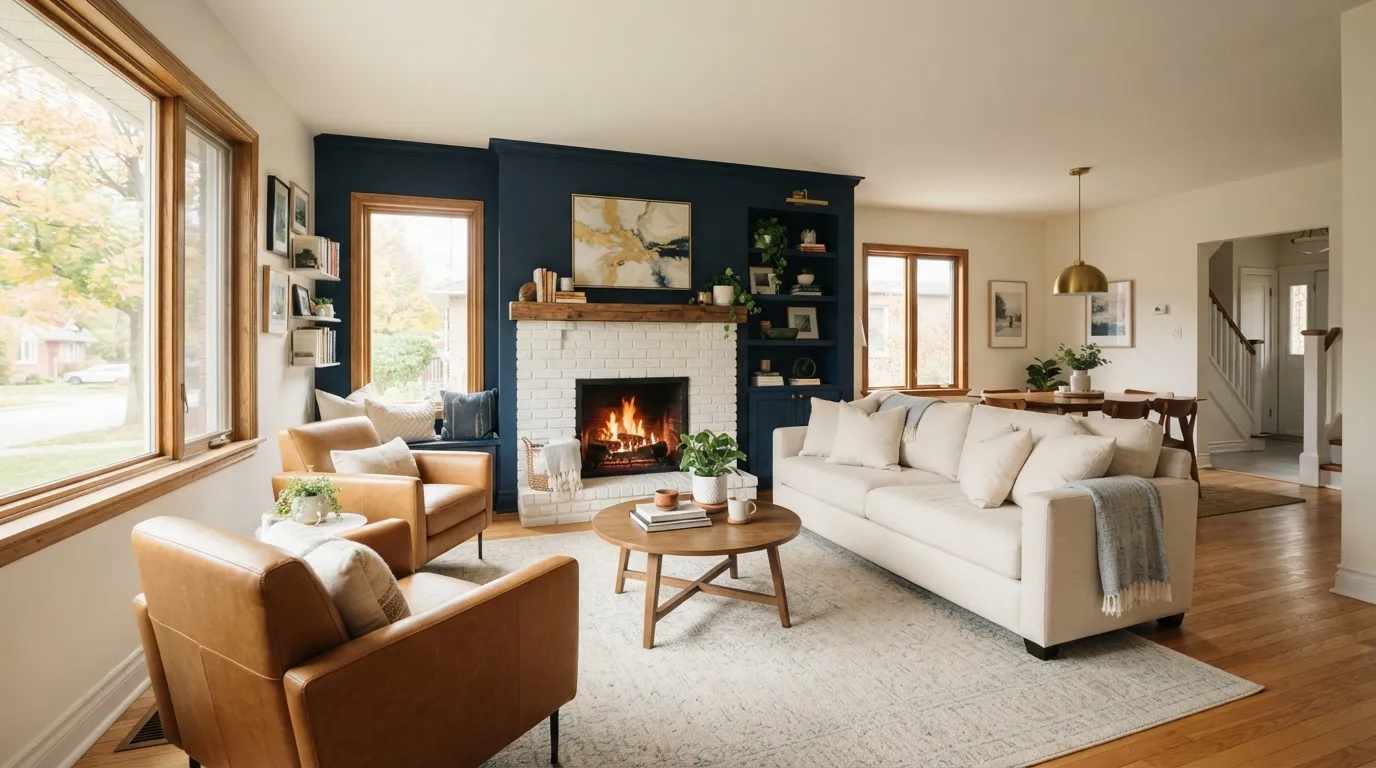
Can bold or dark colours be used without making a room feel smaller?
Yes. With the right mix of contrast, reflectivity, lighting and layout you can use bold or dark paint without the room feeling cramped, by balancing dark walls with brighter planes, reflective finishes, and scaled accents.
What we mean by 'bold' and 'dark'
Bold refers to saturated hues — deep blues, forest greens, and saturated reds — while dark refers to low-value colours: deep greys, charcoal blacks, and navy. Both change perceived space by absorbing light; understanding their light-absorbing qualities helps you place them where they benefit a room.
How contrast controls depth
High contrast between walls, trim and ceilings creates visual layers that read as depth. A dark accent wall paired with a lighter ceiling and bright trim makes the dark plane recede rather than swallow the room.
The role of finish and reflectivity
Paint finish affects perceived size: eggshell and satin reflect moderate light and can soften a dark colour, while matte finishes soak up more light and increase intimacy. Use glossier trims or ceiling paints strategically to bounce light without making surfaces look cheap.
Lighting and furniture as design partners
Natural and layered artificial lighting mitigate light loss on dark surfaces; furniture scale, placement and lighter textiles give the eye places to rest. Planning lighting and furniture along with paint choices prevents a heavy, closed-in feel.
Step-by-Step: Using Bold and Dark Colours Without Shrinking a Room
Follow this sequence to plan and execute a paint project that uses bold or dark colours while keeping the space feeling open.
- 1
Assess the room’s natural light and orientation
Stand in the room at different times of day to note sunlight direction and intensity; south- and west-facing rooms usually receive stronger light in Toronto’s timezone, which helps darker paints. Record window sizes and obstructions — mature maples or neighboring houses in nearby Mississauga or North York can reduce light and change your paint choice.
- 2
Choose a focal plane for the dark colour
Decide whether an accent wall, cabinetry, or the ceiling will wear the dark or bold colour. Using a single plane — often the wall behind a bed or fireplace — minimizes the light-absorbing surface area and preserves perceived volume.
- 3
Select complementary lighter planes and finishes
Pair your dark colour with a brighter ceiling, lighter trim, or glossy mid-tone accents to create contrast. For example, charcoal walls with a warm white ceiling (and satin finish trim) will read as taller and more open than charcoal walls with a matte ceiling.
- 4
Plan layered lighting
Design at least three layers: general (overhead), task (reading, counters) and accent (picture lights, uplights). In Toronto’s variable seasons, ensure fixtures and bulbs provide warm-to-neutral colour temperatures and dimming so you can soften the mood without losing openness.
- 5
Test large samples live
Roll 2–3 square-foot samples in different orientations: one on the focal wall, one opposite, and one near the ceiling line. Observe samples at morning, afternoon and after-dark to judge how the colour reads with your home’s actual light and furniture.
- 6
Finish and furnish with balance
After painting, bring in lighter textiles, reflective elements (mirrors, metallic hardware) and appropriately scaled furniture. Small, high-contrast accents like white baseboards or a light area rug give the eye relief and keep the room from feeling smaller.
Mistakes to Avoid
Common missteps make dark colours feel shrinking instead of sophisticated. Avoid these practical pitfalls to get the look you want without surprise results.
Painting every surface the same dark shade
Covering ceiling, walls and trim in one dark tone eliminates contrast and flattens spatial cues — the room reads smaller. Keep at least one plane lighter (typically the ceiling or trim) to define edges and height.
Skipping live sample testing
Relying on a chip or digital swatch ignores how light and furnishings change the colour. Roll full-size samples on-site and observe them in all lighting conditions before committing to gallons.
Underestimating lighting needs
Dark surfaces need more purposeful lighting; relying solely on a central fixture often leaves corners dead and the room visually smaller. Include task and accent lights and choose bulbs with consistent colour temperature to avoid patchy appearance.
Using the wrong finish for the space
Matte finishes may look luxurious but can absorb too much light on large dark surfaces; high-gloss can highlight imperfections. Use matte or flat on ceilings and large walls where texture hides, and satin or semi-gloss on trim, doors and high-touch areas for durability and light rebound.
What Affects Your Outcome
Several practical factors determine whether a bold or dark paint will feel expansive or confining.
Amount and direction of natural light
Rooms with abundant south- or west-facing light tolerate darker colours better than north-facing rooms, which receive cooler, lower-intensity light most days.
Ceiling height and architectural volume
Higher ceilings forgive more dark colour because the added vertical space retains a sense of air; low 8-foot ceilings in many Toronto row houses need careful contrast to avoid feeling boxed in.
Finish and paint sheen
Sheen alters light reflection: flatter sheens absorb light while satin/semi-gloss reflects it. Choose sheen based on surface condition and where you want light to bounce.
Furniture scale and contrast
Heavy, dark furniture against dark walls increases visual weight. Lighter upholstery, open-legged furniture, or raised pieces help separate planes and maintain openness.
Room function and traffic
Bedrooms and dens can tolerate more intimacy from dark paint; living rooms and kitchens—where you want a lively feel—often benefit from lighter complementary planes and brighter task lighting.
Surrounding materials and flooring
Light wood floors or reflective stone offset dark walls; very dark floors next to dark walls compound the shrinking effect. Consider rugs or lighter plinths to break heavy contrasts on the floor plane.
Frequently Asked Questions
Will a dark ceiling make my room feel smaller?
A dark ceiling lowers the visual height and creates intimacy; in rooms with low ceilings this can feel shrinking. If you want a dark ceiling, balance it with lighter walls and increased vertical lighting or choose the ceiling only for larger or high-volume rooms.
Is it better to paint trim dark or light with dark walls?
Light trim paired with dark walls increases perceived depth and defines architectural lines, while dark trim with dark walls creates a cocooned feeling. Use lighter trim for openness unless you want a deliberately moody, unified look.
How much should lighting change after painting a room dark?
Expect to increase layers: add more ambient fixtures, a couple of task lights and at least one accent source. Dimmable LED lights with warm-to-neutral colour temperatures let you tune brightness so dark walls read rich rather than oppressive.
Can I use dark colours in small Toronto apartments?
Yes—when used as accents, on ceilings in rooms with higher clearances, or on cabinetry and millwork. In Toronto’s older apartments (such as those in Riverdale or the Annex) prioritize lighter ceilings and reflective accents and test samples because window sizes vary widely.
Should I hire a professional painter for dark colours?
A pro helps with surface prep, tint accuracy and finish selection—important when sheen and colour uniformity matter most. For homeowners in Toronto, a licensed contractor also understands local climate effects on drying times and the practicalities of working in row houses and condos; verify credentials and references.
Do building permits or condo rules affect painting choices in Toronto?
Interior painting rarely requires a city permit, but condo corporations and historic districts may have rules about colour changes on visible exteriors or shared spaces. Always check with your condo board or Toronto’s local building department when painting balconies, exterior façades or communal corridors.
Free in-home colour and lighting assessment
Schedule a no-cost visit so a painter can test samples, evaluate light and suggest finishes tailored to your Toronto home.
Get a Free Quote