
DIY vs Professional Painting: Where Each Makes Sense
A clear guide to deciding whether to paint yourself or call a pro in Toronto, ON.
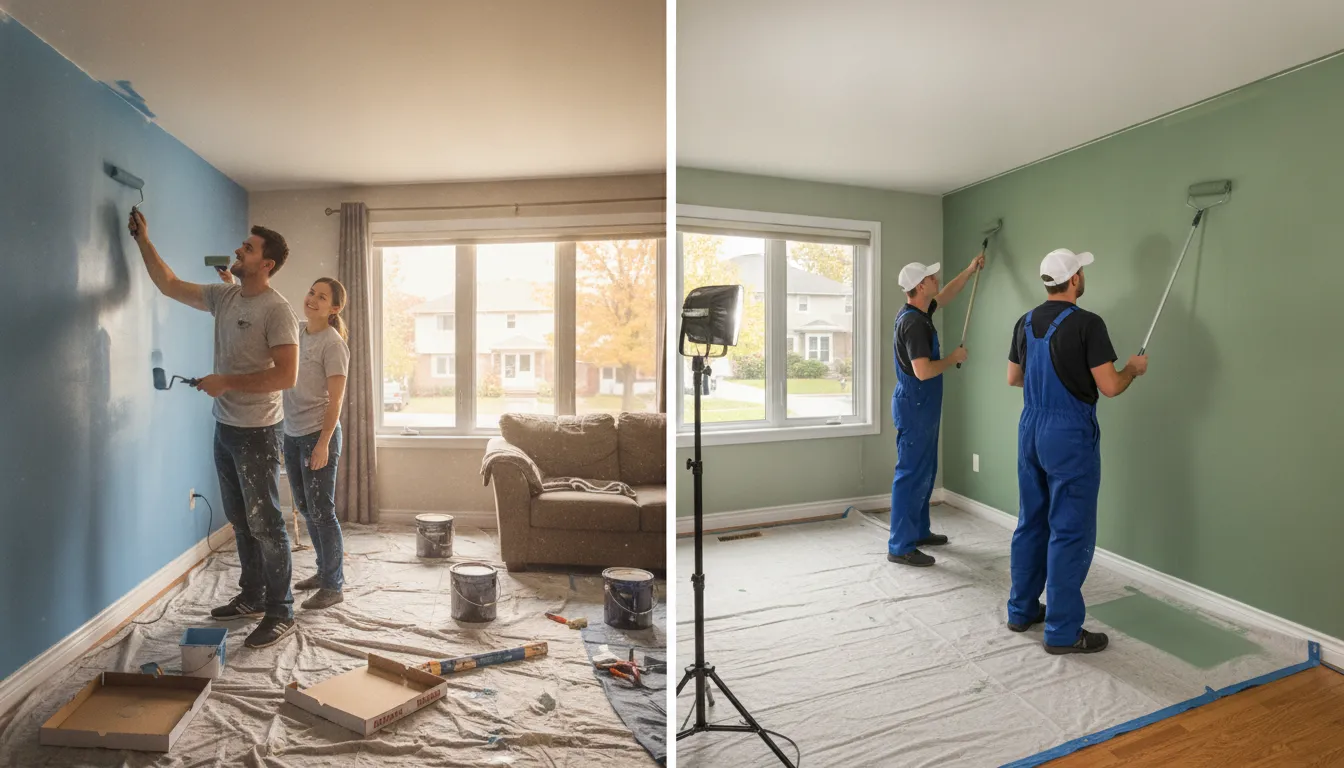
Should I paint the house myself or hire a professional?
Do the work yourself if the job is small, straightforward, and you have time and basic tools; hire a professional for large areas, complex substrates, safety risks, tight timelines, or when you need a guaranteed, long-lasting finish.
What 'DIY' typically covers
DIY is best for single rooms, accent walls, trim refreshes, or touch-ups. These projects usually require basic tools (brushes, rollers, drop cloths, sanding blocks) and a few weekend days rather than specialized equipment.
What professionals bring
Professional painters handle large exterior jobs, high ceilings, scaffolding work, tricky substrates (stucco, cedar, aluminum siding), and full home repaints. They provide surface prep expertise, industrial-grade primers/paints, multi-coat systems, and warranties or guarantees.
Trade-offs: cost vs. time vs. quality
DIY saves labor cost but usually takes longer and risks uneven finish if you lack experience. Pros cost more up front but often deliver faster, more durable results that can be more cost-effective over several years—especially on exteriors exposed to Toronto's freeze-thaw cycles.
Step-by-Step: DIY vs Professional Painting: Where Each Makes Sense
Use this step list to evaluate your project and move from decision to completion, whether DIY or pro.
- 1
1) Scope the project
Measure the area (square footage of walls or exterior surface) and note challenges like high access, lead paint, mould, or water damage. A precise scope helps estimate materials, time, and whether specialized contractors are needed.
- 2
2) Inspect and document condition
Photograph surfaces, record peeling, cracking, or substrate changes, and test for lead if the home was built before 1990. Good documentation guides prep needs and, for insurance or condo boards in Toronto, helps with approvals.
- 3
3) Decide DIY or hire
Compare your time, comfort with ladders and prep work, and desired longevity of finish against contractor quotes and timelines. If the job involves scaffolding, extensive caulking, or matching historic trim, lean toward a professional.
- 4
4) Prepare the work area
For DIY: gather quality brushes, rollers, tape, primers, and drop cloths; remove or mask fixtures and furniture. For pros: expect them to protect floors, landscaping, and neighboring properties (important in Toronto rowhouse and semi-detached streets).
- 5
5) Execute and inspect
Apply primer and correct paint system for the substrate; use proper drying times between coats and check coverage under natural light. After completion, walk the job with the painter or check your own work for runs, missed spots, and consistent sheen.
- 6
6) Finalize and maintain
Remove protection, store leftover paint labeled with room and date, and plan small seasonal touch-ups—Toronto's cold winters and humid summers can accelerate edge wear. If professional, get warranty details in writing and a maintenance plan.
Mistakes to Avoid
Painting looks simple until problems appear. Avoid these common, costly mistakes by planning ahead, using correct materials, and recognizing when to call a pro.
Skipping proper surface prep
Failing to remove loose paint, clean dirt, or treat mildew leads to early peeling and reduced adhesion. Professionals spend most of the project time on prep; do the same for DIY—clean, sand, caulk, and prime where needed.
Using the wrong paint or primer
Interior paints are formulated differently than exterior ones; glossy finishes can highlight imperfections, while flat paint may stain more easily. Match paint type to substrate—wood, metal, masonry—and to Toronto's humid summers and freezing winters for exterior systems.
Underestimating access and safety
Working from unstable ladders or without fall protection for second-story exteriors dramatically raises risk. Professionals bring scaffolding, harnesses, and the experience to safely paint high or awkward places—an important factor in Toronto neighborhoods with tall older homes.
Rushing between coats
Applying a second coat before proper drying traps solvents and causes poor adhesion or tacky finishes. Follow manufacturer recoat times and watch local conditions—high humidity or low temperature in spring/fall in Toronto can extend drying times.
What Affects Your Outcome
Several practical factors change whether DIY or pro is the better choice and how long the finish lasts.
Project size and complexity
Large square footage, multiple rooms, or full exteriors increase labor and logistics; professionals scale labor and equipment more efficiently than a weekend DIYer.
Surface condition
Fresh, smooth drywall is easy to paint, but peeling exterior wood, flaking metal, or mouldy surfaces require specialized prep and sometimes trades other than painters.
Access and safety
High walls, steep roofs, or tight alleys (common in Toronto's older neighborhoods like The Annex) may need ladders, scaffolds, or hoists; these raise costs and the safety bar for DIY work.
Material and system selection
Choosing the right primer, paint chemistry (acrylic, alkyd, elastomeric), and sheen affects durability; pros can recommend paint systems matched to Toronto's freeze-thaw cycles and urban pollution.
Timeline and scheduling
If you must finish before a move-in, event, or seasonal weather window, a professional crew can meet tight schedules; DIY projects often stretch longer than expected.
Local rules, permits, and insurance
Condo boards, heritage districts, or rental agreements can limit colors, require permits, or call for licensed contractors. Insurance claim processes and building office rules in Toronto or nearby Mississauga and Markham may affect who can do the work—verify locally.
Frequently Asked Questions
How do I estimate paint quantity and cost?
Measure wall area in square feet and subtract windows/doors. For interior walls, divide the total square footage by the coverage per litre on the paint can to get litres needed, then add 10–15% for waste and touch-ups; factor in primer and tools if DIY.
When is lead testing necessary?
If your Toronto home was built before 1990, assume layers of old paint may contain lead and test before sanding or scraping extensively. If lead is present, provincial and municipal rules, plus safety practices, guide remediation—consult a certified contractor and verify requirements locally.
Can I get a warranty if I hire a local painter?
Many reputable painters offer written guarantees on workmanship and may pass through manufacturer paint warranties. Get the warranty scope and duration in writing and confirm who is responsible for touch-ups and what voids the warranty (like damage from lack of maintenance).
How does Toronto’s climate affect exterior paint jobs?
Freeze-thaw cycles, salt used on roads, and summer humidity stress exterior coatings—use paints and primers rated for exterior use and appropriate for masonry or wood. Proper prep and allowing paint to cure in recommended temperature ranges is key to longevity.
Should I hire based on price or references?
References and a clear written estimate matter more than the lowest bid; check recent photos of completed work, ask for a breakdown of prep, materials, and crew size, and verify liability insurance and WSIB coverage. In Toronto’s older housing stock, experience with historic materials can be especially valuable.
Do I need a permit to paint?
Most interior and simple exterior paint jobs don’t require a permit, but painting that alters heritage features, affects structural elements, or involves scaffolding on public property may need approvals from the City of Toronto or condo/heritage bodies. Always verify with your local building office or condo board.
Free on-site painting assessment for Toronto homes
Book a no-obligation inspection so a professional can evaluate prep needs, access, and provide an accurate quote.
Get a Free Quote