
Staircase and railing refinishing in East York
Refinish a two-storey stair and matching railing with low-dust sanding and a durable lacquer finish that fits an older East York home.
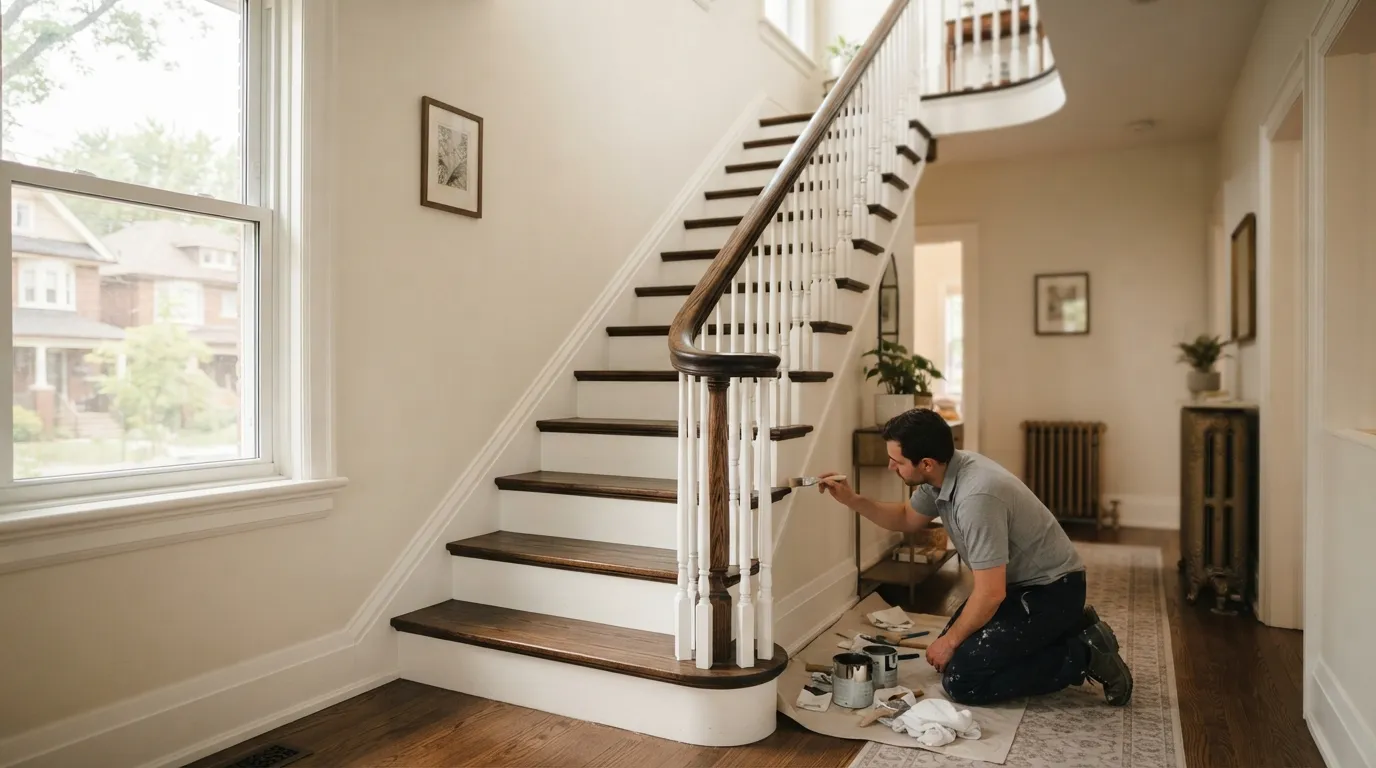
- 1
Inspect and document
We started with a thorough walk-through, photographing each riser, tread and baluster. We checked fasteners, glued joints and the substructure; where the stringer showed rot we cut back to sound wood and installed epoxy consolidant and a local repair block.
- 2
Low-dust sanding and prep
We used a handheld orbital sander with 120–180 grit and a HEPA-rated dust extractor to remove old coatings down to clean wood on treads and rails. For balusters and tight profiles we hand-sanded and used a scotch-brite pad to avoid over-sanding the rails' profile.
- 3
Fill, glue and fasten
Nail pops and small gaps were addressed with a two-part wood filler and tight-fitting plugs where needed. Loose nosings were reglued with polyurethane construction adhesive and clamped overnight. All fasteners were countersunk and sealed to keep future movement quiet.
- 4
Primer and stain decisions
Where risers were painted, we applied a shellac-based primer to block tannins and old finish bleed. For the treads and handrail we used a water-based penetrating stain on oak to get the colour the homeowner wanted, then wiped back to highlight the grain without blotchiness.
- 5
Finish coat and curing
We applied a commercial-grade, waterborne conversion varnish (two coats, cross-rolled; sand between coats with 320 grit) for quick return to service with industrial durability. Final cure was monitored; we advised light use for the first 24 hours and full weight after 72 hours to ensure film hardness.
Frequently Asked Questions
How long will a project like this take?
Typically three to five days on a two-storey stair: one day for prep and repairs, one day for sanding and priming, one day to stain and apply the first coat, and another day for the final coat and touch-ups. Seasonal humidity can add cure time, so we factor that into scheduling in spring and summer.
How disruptive will it be to live in the house?
We contain dust with zipper barriers and a HEPA extractor and keep one path open where possible. Work is noisy during sanding days, but we avoid weekend-only schedules unless requested. Because we’re email-only, all scheduling and prep notes are shared in writing beforehand.
When does a staircase need refinishing rather than replacement?
Refinish when treads and balusters are structurally sound but cosmetically worn or mismatched. If you find rot into framing, major structural sag or code non-compliance with rise/run, replacement may be the right call. We’ll assess and recommend the practical option.
What about odour and indoor air?
We favour waterborne products in occupied homes for lower VOCs and faster re-entry. For some repairs we must use solvent-based epoxies, and we ventilate accordingly. In East York’s close quarters and nearby neighbourhoods like Leaside, low-odour choices are often preferred.
Ready to sort your stair in East York?
Email us details and photos — we’ll reply with a clear plan and written estimate.
Get a Free Quote